

You are sensitive, be strong
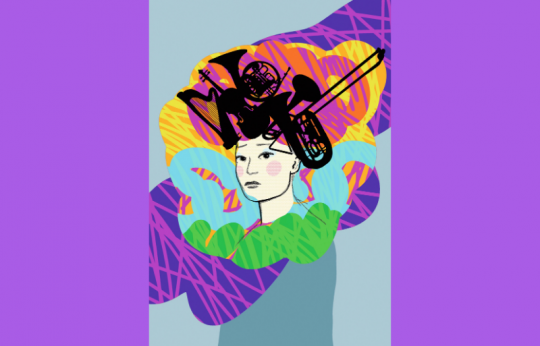
They are great lovers because they listen to the other party’s needs. They themselves have the ability to experience extremely intense orgasms. They can provide support and are sincerely interested in the conversation. They are filled with compassion.
Although intense stimuli make it difficult for them to go to, for example, their favourite concert, they usually try to overcome their resistance. And yet other people look down on them telling them to pull themselves together, stop being so sensitive. They can seem nervous at work and too emotional at home.
They feel like they don’t fit in, although they try so hard to catch up with people with low sensitivity. From childhood, they hear a lot of criticism and good advice. But high sensitivity is a feature of the nervous system, not a lifestyle choice. No matter how many times such a person has heard that they are too sensitive – it will not change their perception of the world. They won’t start to feel less.
Sensitive women are like the heroines of Jane Austen’s books. Detached from reality, weak and even exalted and using their sensitivity to live comfortably.
Almost everyone confuses high sensitivity with hypersensitivity or with emotional lability. To be sensitive, you need strength – the strength to withstand critical remarks, to constantly adapt to the world. Women with exceptional sensitivity push their limits by proving to people around them that they are doing great in a world full of stimuli.
They do not fool around, quite the opposite. They are often very critical and demanding.
Some do not even want to accept that they are highly sensitive, internalising the beliefs of others: I’m strange, mismatched, I’m too gentle with myself, I definitely exaggerate.
I feel too much
One of the people I talked to told me about her experience. She went to a weekend workshop with a friend who used intense perfume. The highly sensitive person I was talking to vomited in the toilet from the head-splitting smell several times during all-day classes. She did not tell her friend about it, she did not want to upset her and cause problems. She gritted her teeth, scolding herself for being overly sensitive and out of the ordinary.
Dr Elaine Aron, an American clinical psychologist, discovered the existence of a certain set of features that characterise nearly 20 percent of population almost 30 years ago. This set is called high sensitivity. Its main ingredient is exceptional responsiveness to sensory stimuli. This means that the harsh light of fluorescent lamps, too much noise, labels on the back of clothes are irritating. People with sensitive senses feel sick from intense flavours and are annoyed by loud conversations between colleagues in the office. In addition, highly sensitive people are sensitive to human reactions. They are characterised by great empathy and the ability to sense subtle details in other people’s behaviour – facial grimaces, micro-gestures, thanks to which they can easily recognise the mood and attitude of whoever they are talking to. They are lightning fast at it. Before the other employees realise that something is wrong, they are usually the first to notice irritation, impatience or sadness even in complete strangers. As a result, they often perform aid professions, in which they can, on the one hand, bring relief to others, and, on the other hand, show insight and ability to analyse cases in detail. In corporate work, they are valued for the so-called soft skills and insight. They are very diligent, meticulous and accurate. Sometimes, however, they are a bit slower in performing their duties. For example, their e-mails are very careful, but writing them can take longer due to distracting stimuli from the office space – a loud coffee machine, conversations next door, or unpleasant lighting. Polish companies still do not pay enough attention to differences in sensitivity to stimuli. People who are not disturbed by strong stimulation may not even realise that for a colleague at the desk next to them even loud stomping can be a huge distraction.
Philosopher or bore
Sensitive people are often artistically inclined, creative, and react lively to art. Their perception of reality is deep, insightful, which may also cause them some difficulties. “I’m considered by other people as a ‘philosopher’ or ’bore,’” says Basia, a 30-year-old graphic designer. “I can’t talk about the weather, I start right away on a high note. Conversations on the level of small talk are difficult for me, I feel their sterility and it annoys me. I would love to talk only about serious matters, but I respect that not everyone likes it, so I always try to adapt to the needs of who I’m talking to.”
Highly sensitive people do well in adapting to people and the world, but it costs a lot of effort. Basia describes her dilemmas regarding the Women’s Strike: “I wanted to go on strikes. My friends, my husband, and even my mother went on marches. But sound stimuli, the crowd – that’s too much for me. It paralysed me. That is why I decided that I would use chalk to draw lightning on the pavements around Warsaw. This is how I wanted to express my objection, rebellion. But at the bottom of my heart I’m ashamed that everyone was there, but me,” she explains.
The majority of highly sensitive women grit their teeth and participate in various meetings, spend their free time with others, dreaming of being alone. From childhood, they learn to live in a world dominated by low sensitivity and they do so extremely well. The price that is paid for such strong stimulation, however, is exhaustion, a feeling of distress, irritation. This can result in depression and tension in the body. Then you will find relief in sleep, yoga, and practising mindfulness and self-compassion. Or in a long process of unwinding in isolation, away from stimulation. This can be a difficult task. For example, when you have young children or a partner who does not understand that after stimulation you sometimes need several days to recover.
Please heal me
Women who are highly sensitive often seek therapy wanting to heal this trait. They want to feel less intense because it can be a nuisance to them. But high sensitivity is not a disease, so it does not need to be treated and absolutely should not be pacified. This would result in denial, loss of authenticity, and even more fatigue. In any case, it is impossible to teach someone that intense perfume does not give them a headache and that harsh light does not cause discomfort. Nevertheless, sometimes people try to suppress sensitivity in their children, encouraging them to be more go-ahead, less analysing, and not too shy, for instance. I am talking about shyness on purpose, because it is one of the myths that I describe in my book “Kobiety, które czują za bardzo” [“Women Who Feel Too Much”]. Sensitive people aren’t always shy or introverted. Their withdrawal is due to the need for low stimulation, isolation, and not being closed and distrustful of others. Those assessed in this way feel misunderstood and begin to diagnose themselves and attach completely unnecessary labels.
Therefore, what may require therapy in highly sensitive people are emotional states resulting from having this trait such as low self-esteem, a sense of inferiority, depression, increasing frustration. These feelings result from the necessity to adapt to an extroverted reality at every step. Dr Elaine Aron notes that while highly sensitive people have so much to offer the world, the world gives them little in return. As all the people I talk to say, it is not about completely adapting the environment to their needs. It is about ordinary human kindness towards highly sensitive friends or co-workers who function in a slightly different mode. “It would be enough to turn down the radio a little, not speak in a raised tone, and leave the evening perfume for the evening to make us feel better so we can focus. Just enough. But still when I ask for it I either hear, ‘Why are you so sensitive, do you have PMS?’ or I’m just ignored,” concludes Basia.
HOW TO ADAPT THE ENVIRONMENT TO YOUR SENSITIVITY
1. Take care of your surroundings. Plants, less intense light, the ability to calm down and work in headphones can bring invaluable relief.
2. Avoid frequently watching overly stimulating films or shows. Be careful how you take on difficult news and unpleasant stories. Don’t be constantly stimulated by information that is overwhelming to you.
3. Tell your loved ones about your needs, what kind of stimulation is good for you and how much is too intense.
4. Read about high sensitivity in various sources. Take a look at the research. What for? To stop stigmatising yourself as a strange and incongruous person.
5. Remember to get a good night’s sleep (minimum eight hours) and avoid food that might stimulate you (e.g. energy drinks).
Katarzyna Kucewicz – psychologist, psychotherapist, sexologist. She runs the INNER GARDEN Psychotherapy and Coaching Centre in Warsaw. She belongs to the Polish Federation of Psychotherapy. Author of three guides, including the book “Kobiety, które czują za bardzo” [“Women Who Feel Too Much”] (Rebis, 2021)
Illustration: Marta Frej
The text was published in „Wysokie Obcasy" on 27 February 2021